
Re-Injury Rates After ACL Reconstruction: Strength, Readiness, and What the Data Shows
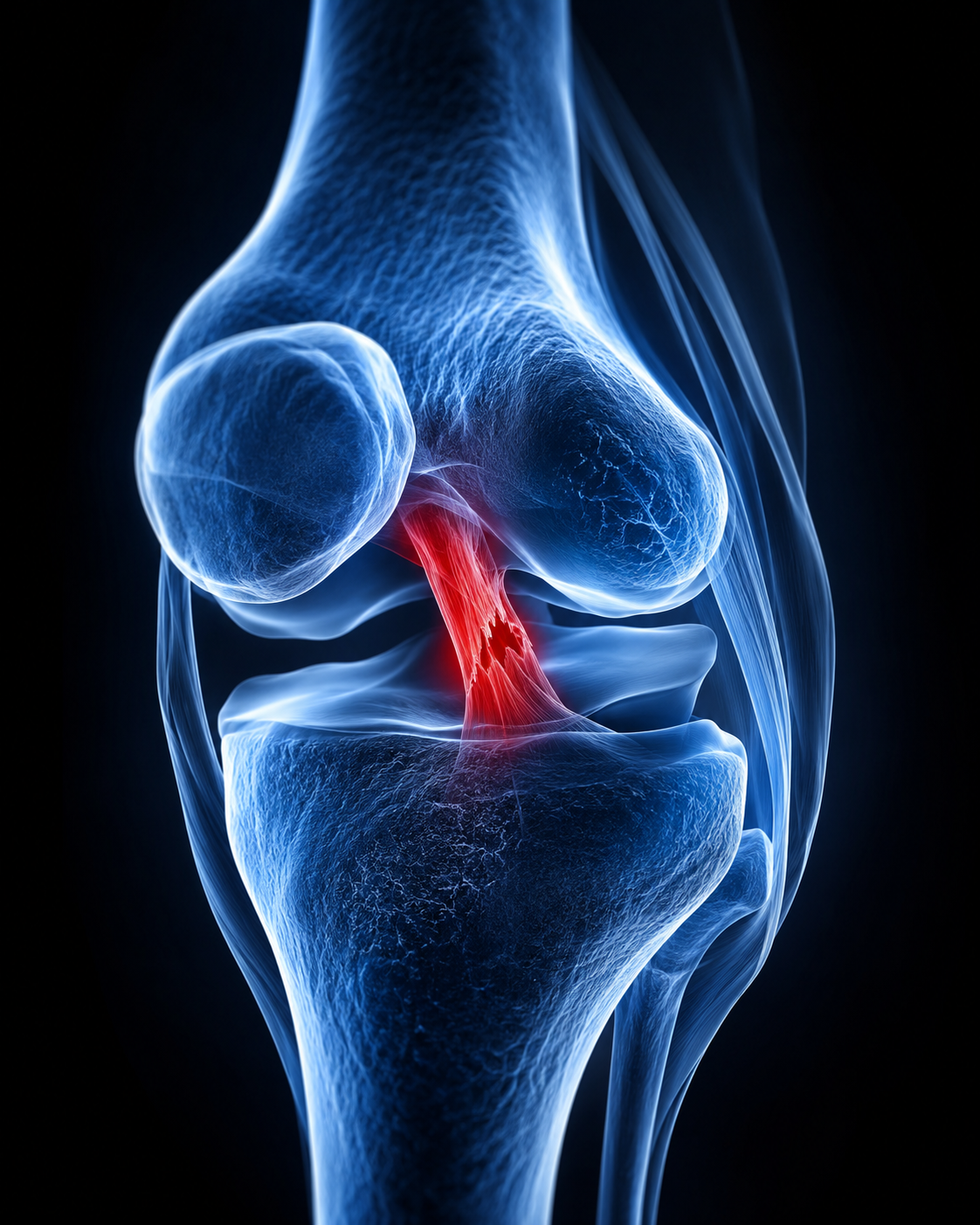
ACL reconstruction has become one of the most common surgical procedures in sports medicine. But the surgery is only the beginning of the problem — research shows that approximately 1 in 4 athletes under age 25 who return to cutting and pivoting sports after reconstruction will sustain another ACL injury at some point after returning to play. The second injury may occur in the reconstructed knee or the opposite knee.
In some studies of athletes under 20, second ACL injury rates have been reported as high as 40%. Those numbers don't reflect surgical failure — they reflect what happens when athletes return to full competition before their body has actually rebuilt the strength, coordination, and load capacity that sport demands.
At KRU Physical Therapy + Performance Lab, we work with athletes navigating ACL recovery at every level. One reason re-injury remains so common is straightforward, even if it's underappreciated: healing and readiness are not the same thing.
01 | Why a Healed Graft Doesn't Mean a Ready Athlete
The new ligament may be surgically intact, but strength, movement quality, coordination, and confidence often take longer to recover than many athletes realize. A graft can show excellent healing on imaging while the athlete in front of it still moves and loads the joint very differently than they did before injury.
This gap matters because returning to competition before those qualities are restored can increase the amount of stress placed on both knees — not just the reconstructed one. Cutting, jumping, and rapid deceleration all demand a level of strength and neuromuscular control that surgery alone cannot rebuild. That has to be earned in rehab, and it doesn't happen automatically just because enough time has passed.
02 | Patterns That Show Up in Athletes Who Re-Injure
Several patterns consistently appear in athletes who experience a second ACL injury. As with most overuse and re-injury patterns, they tend to overlap rather than occur in isolation.
Strength Deficits Remain Common Long After Surgery
Many athletes return to sport with significant quadriceps weakness, even when pain and swelling are gone. The quadriceps help absorb force during landing, deceleration, and cutting. When strength is lacking, the knee is forced to handle more load with less muscular support. Research has also found that strength asymmetries don't always resolve on a predictable timeline — one study tracking soccer players found that quadriceps limb symmetry actually worsened in the months following surgery, even as raw strength continued to improve, suggesting the deficit can persist quietly well past the point an athlete feels "recovered."
Time Alone Does Not Determine Readiness
A common milestone is 9 months after surgery, but the calendar does not measure strength, movement quality, or performance capacity. One prospective study found that young athletes who returned to sport before the 9-month mark had a rate of new injury seven times higher than those who waited longer — and that each additional month of delay up to 9 months further reduced reinjury risk.
The Opposite Knee Is Often at Equal or Greater Risk
Many athletes focus entirely on protecting the surgical knee. However, research consistently shows that a large share of second ACL injuries occur in the uninvolved knee — in one large cohort, contralateral injuries accounted for more second ACL injuries than graft ruptures in the surgical knee itself. This suggests that the underlying movement and force-management problems that contributed to the first injury may still be present after surgery, regardless of which knee was originally reconstructed. Studies have also found that the uninvolved limb in ACL-reconstructed athletes tends to be measurably weaker than the same limb in athletes who never had an ACL injury — evidence that the deficit isn't confined to the surgical side.
Young Athletes Face the Highest Risk
Athletes under 25 who return to high-demand sports such as soccer, basketball, football, lacrosse, and volleyball experience substantially higher rates of second ACL injury than older athletes. Exposure to more cutting, jumping, and change-of-direction movements increases cumulative risk, and younger age itself has been independently associated with higher re-injury rates in multiple cohort studies — even after accounting for strength and time to return.
03 | Redefining What "Successful" Reconstruction Means
A successful ACL reconstruction should not be measured only by whether the graft heals. The more important question is whether the athlete can produce force, absorb force, change direction, and tolerate sport demands at a level that matches competition.
This is the core shift happening in how sports medicine approaches ACL recovery — moving away from purely time-based return-to-sport decisions and toward a model that combines biological healing, objective performance testing, and psychological readiness. A graft that has healed on schedule still doesn't tell you whether an athlete can decelerate explosively, land asymmetrically without their knee collapsing inward, or trust the limb enough to commit fully to a cut at game speed.
04 | What Return-to-Sport Testing Typically Evaluates
Return-to-sport testing typically evaluates several key areas:
- Quadriceps and hamstring strength, usually measured against the uninvolved limb as a limb symmetry index.
- Single-leg hopping and landing control, assessing both distance/power and the quality of how force is absorbed on landing.
- Limb symmetry between sides, across multiple strength and performance measures rather than any single test in isolation.
- Change-of-direction performance, often measured through agility or running-based tests under time pressure.
- Psychological readiness and confidence, frequently assessed through standardized questionnaires, since fear of re-injury and lack of confidence in the knee are independently associated with worse outcomes.
These measures help identify whether an athlete has truly regained the physical qualities required for sport rather than simply reaching a specific date on the calendar. No single test tells the whole story — which is part of why researchers continue to study how these measures should be combined and weighted.
05 | What This Means in Practice
The goal after ACL reconstruction is not simply to return to sport. The goal is to return with the strength, movement capacity, and readiness needed to reduce the risk of becoming part of the re-injury statistics.
- Don't equate "pain-free" with "ready." Strength and movement quality often lag well behind how the knee feels day to day.
- Take quadriceps strength seriously, on both limbs — deficits are common and don't always resolve without targeted, progressive loading.
- Treat the 9-month mark as an earliest possible point, not a target. Waiting longer when testing isn't yet where it needs to be has been linked to meaningfully lower reinjury rates.
- Don't assume the uninvolved knee is automatically safe. The movement patterns that contributed to the first injury can still be present on either side.
- Support a criteria-based return rather than a date-based one, even when team or season timelines create pressure to return sooner.
- Understand that young athletes — particularly those under 25 in cutting and pivoting sports — carry the highest re-injury risk of any group, and plan return-to-play timelines accordingly.
- Recognize that confidence and psychological readiness are measurable, real factors in re-injury risk, not just "mental toughness" issues to push through.
- Work with a physical therapist who uses objective testing to guide return-to-sport decisions rather than relying on time elapsed alone.
The athletes with the lowest risk profiles are typically those who restore strength, pass objective testing, and progressively rebuild sport-specific workload before full competition — not the ones who simply check a box on the calendar.
Returning to Sport After ACL Reconstruction?
At KRU Physical Therapy + Performance Lab, we guide athletes through criteria-based ACL rehabilitation and return-to-sport testing to reduce re-injury risk — for athletes at every level, youth through professional. Two locations across South Florida, plus telehealth worldwide.
References
- Grindem H, et al. Young Athletes Who Return to Sport Before 9 Months After ACL Reconstruction Have a Rate of New Injury 7 Times That of Those Who Delay Return. J Orthop Sports Phys Ther. 2020.
- Kyritsis P, et al. Likelihood of ACL graft rupture: not meeting six clinical discharge criteria before return to sport is associated with a four times greater risk of rupture. Br J Sports Med. 2016.
- Webster KE, Hewett TE. What is the Evidence for and Validity of Return-to-Sport Testing after ACL Reconstruction Surgery? A Systematic Review and Meta-analysis. Sports Med. 2019.
- Wellsandt E, et al. Return-to-Sport Criteria After ACL Reconstruction Fail to Identify the Risk of Second ACL Injury. Am J Sports Med. PMC. 2023.
- Rehabilitation and Return to Sport Testing After Anterior Cruciate Ligament Reconstruction: Where Are We in 2022? Annals of Joint / ScienceDirect. 2022.
- Isokinetic Strength Recovery and Fear of Re-Injury After ACL Reconstruction in Male Soccer Players. PMC. 2025.
- Return to Play After ACL Reconstruction: Integrating Key Metrics. AOSSM Sports Medicine Update. 2025.
- 2020 Panther Symposium ACL Injury Return to Sport Consensus Statement.