
Eccentric Hip Adductor Strength and Return-to-Sport Timelines in Basketball Player
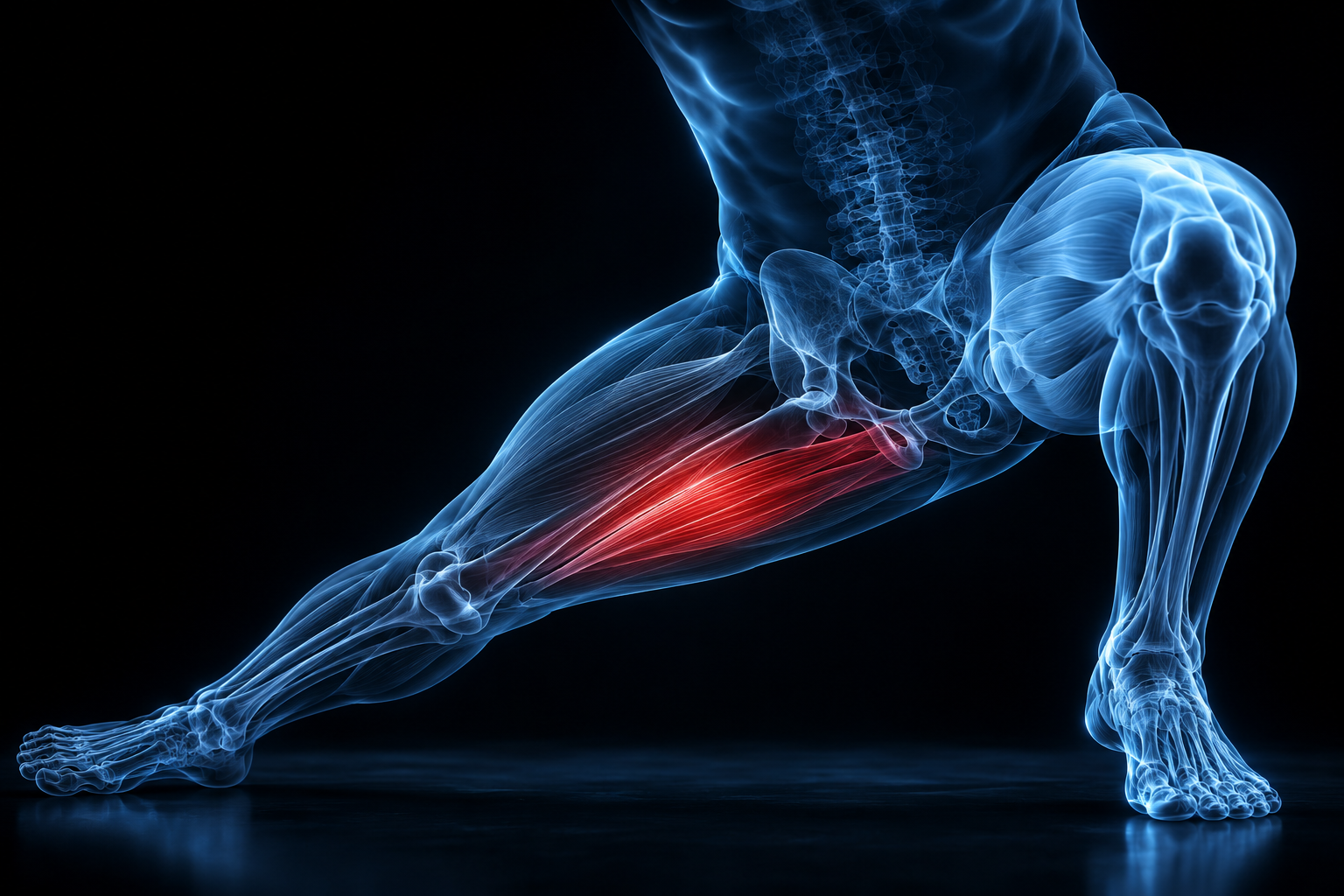
Groin strains are one of the most common soft tissue injuries in sport — and one of the most likely to come back. Recurrence rates ranging from 18% to 24% have been reported across soccer, hockey, Australian rules football, and professional basketball, and most of those recurrences happen within the first two months of returning to activity.
The reason isn't bad luck or weak tissue. In most cases, the underlying problem is that athletes return to sport when the groin feels better — not when the hip adductors have actually rebuilt the strength and load capacity needed to handle what the sport demands. Pain resolution and physical readiness are not the same thing, and treating them as equivalent is the most predictable path to re-injury.
At KRU Physical Therapy + Performance Lab, we work with athletes across a wide range of sports managing groin injuries and adductor-related hip pain. What the research consistently points to is that the most modifiable risk factor — and the one most often undertrained — is eccentric hip adductor strength.
01 | What's Actually Being Injured
The hip adductors are a group of muscles along the inner thigh — the adductor longus, adductor brevis, adductor magnus, pectineus, and gracilis — responsible for pulling the leg inward and helping stabilize the pelvis during single-leg loading. In most acute injuries, the adductor longus is the primary structure involved, most commonly at the myotendinous junction where the muscle meets the tendon.
How Adductor Injuries Happen
Acute adductor injuries most commonly occur when the muscle is forced to activate rapidly while simultaneously being stretched — during a sudden change of direction, a wide lateral step, or a kicking motion in an overstretched position. This type of loading, where the muscle is contracting eccentrically (lengthening under tension), is the most mechanically demanding scenario the adductors face, and it's exactly the kind of force that exposes a strength deficit.
Groin pain can also develop gradually without a single identifiable incident — the result of repetitive loading accumulating faster than the tissue can recover, particularly during periods of increased training volume or sport participation. Both presentations share a common thread: the adductors were being asked to manage forces they weren't adequately prepared to handle.
Why the Adductors Are Frequently Undertrained
Most training programs load the adductors concentrically — squeezing the legs together against resistance. This builds strength in one direction but does relatively little to prepare the muscle for the rapid eccentric loading that happens during athletic movement. An athlete can have reasonable concentric adductor strength and still carry a meaningful eccentric deficit that doesn't show up until the tissue is challenged at game speed. This gap between how the muscle is trained and how it's actually used is one of the most consistent contributors to groin injury across sports.
02 | Risk Factors for Groin Injury
Several factors consistently show up in athletes who develop adductor-related groin injuries. Most are modifiable, which is the more important takeaway.
Low Eccentric Hip Adductor Strength
This is the most consistently identified and most directly trainable risk factor. Multiple systematic reviews have found that reduced eccentric hip adduction strength is an independent predictor of groin injury, particularly in athletes with a prior history. The Copenhagen Adduction Exercise — a side-lying, bodyweight eccentric loading exercise — has shown significant strength gains in randomized controlled trials, with a mean increase of approximately 0.49 Nm/kg, and has been associated with meaningful reductions in adductor-related injury risk when implemented consistently as part of a warm-up or strength program.
Previous Groin Injury
A prior history of groin pain or adductor injury is one of the strongest predictors of future injury across the literature. Most recurrences occur within the first two months of returning to full training — a timeline that reflects a tissue that recovered enough to feel normal but hadn't rebuilt the eccentric capacity needed to handle athletic load. Returning to sport based on pain resolution alone, without objective strength testing, is the most common setup for re-injury.
Adductor-to-Abductor Strength Imbalance
The ratio of adductor to abductor strength matters alongside absolute strength levels. When the abductors significantly outpace the adductors — a common adaptation in athletes who train primarily in the sagittal plane — the adductors are left managing lateral force demands without relative strength to match. Regular assessment of both muscle groups, and programming that addresses imbalances proactively, is part of a comprehensive approach to groin injury prevention.
Limited Hip Rotation Range of Motion
Restricted hip internal and external rotation has been independently associated with increased groin injury risk. When the hip can't move through its full rotational range efficiently, the adductor muscle-tendon unit may be placed under greater stress at end-range positions — exactly where injuries tend to occur.
Rapid Increases in Training Load
Groin pain that develops gradually — without a clear acute incident — is often the result of training load outpacing the tissue's capacity to adapt. Sudden increases in running volume, sprint frequency, or cutting-based activity are common triggers, particularly at the start of a new season, after a break from training, or during a stretch of particularly heavy competition.
03 | What Recovery Actually Requires
Most adductor injuries respond well to conservative, non-operative treatment. Active rehabilitation — not rest alone — is the standard of care, and progressive eccentric loading is the most evidence-supported intervention for both recovery and re-injury prevention.
| Injury Grade | Description | Typical Return Timeline |
|---|---|---|
| Grade 1 | Minor muscle strain, fibers intact, mild pain and tenderness | 1–2 weeks |
| Grade 2 | Partial muscle or tendon tear, more significant pain and weakness | 4–6 weeks (avg ~19 games in professional athletes) |
| Grade 3 | Complete rupture, significant functional loss | 3–6 months; surgical consultation may be warranted |
| Long-standing groin pain | Chronic, often multifactorial — adductor tendinopathy, pubic overload, or mixed | 10–16 weeks with structured rehabilitation |
These timelines are averages. What actually determines readiness to return isn't the date — it's whether the adductor can handle eccentric load progressively and symmetrically compared to the uninjured side, and whether the athlete can execute sport-specific movements without compensating or guarding.
04 | Putting This Into Practice
Groin injury prevention and recovery follow the same underlying logic: the adductors need to be trained specifically for the eccentric demands of sport, monitored for strength deficits, and given adequate time to rebuild load capacity before returning to full activity.
- Include eccentric adductor work consistently — the Copenhagen Adduction Exercise is the most evidence-supported option and requires no equipment beyond a partner or a stable anchor.
- Don't return to cutting and change-of-direction activity based on pain alone. Eccentric strength symmetry is a more reliable marker of readiness than how the groin feels at rest or during straight-line movement.
- Address hip rotation mobility as part of your regular maintenance — restricted rotation is an independent risk factor that often goes untreated after a groin strain.
- Increase training load gradually after any period of reduced activity. Groin pain that develops without a clear incident is usually a load management problem, not a structural one.
- Treat groin strains as injuries that require objective criteria for return, not just a pain-free report from the athlete. Most re-injuries occur when athletes return before they've rebuilt eccentric capacity.
- Build proactive eccentric adductor work into warm-up and strength programming, not just rehabilitation after injury.
- Be especially cautious during high-volume training periods — preseason ramp-ups, tournament weekends, and stretches with back-to-back competitions are when load spikes most often trigger groin symptoms.
- Recognize that groin pain accounts for up to 10% of sports injury clinic visits — it's common enough that a proactive approach to adductor strength pays off consistently across a roster.
The athletes who manage groin health best over the course of a season are the ones who treat adductor strength as a year-round priority — trained progressively, assessed regularly, and loaded specifically for the demands of their sport rather than cleared when pain disappears.
Managing a Groin Injury or Looking to Reduce Your Risk?
At KRU Physical Therapy + Performance Lab, we help athletes address adductor strength deficits, manage return-to-sport timelines, and reduce groin re-injury risk — for athletes at every level, across every sport. Two locations across South Florida, plus telehealth worldwide.
References
- Lace AD, et al. Adductor injuries in the National Basketball Association: an analysis of return to play and player performance from 2010 to 2019. Orthop J Sports Med. PubMed. 2020.
- Risk Factors Associated with Groin Pain in Athletes: A Systematic Review. Life (Basel). MDPI. 2025.
- The influence of Copenhagen adduction exercise on the management of groin pain: A systematic review. Journal of Sport and Health Science. ScienceDirect. 2026.
- Vergani L, et al. Return to Play in Long-Standing Adductor-Related Groin Pain: A Delphi Study Among Experts. Sports Med Open. PMC. 2022.
- The Effect of Therapeutic Exercise on Long-Standing Adductor-Related Groin Pain in Athletes: Modified Hölmich Protocol. PMC. 2018.
- Marušič J, Šarabon N. Hip adduction and abduction strength in youth male soccer and basketball players with and without groin pain in the past year. PLoS One. PMC. 2022.
- Monitoring and training for hip and groin health in-season. Sportsmith. 2026.
- Adductor Injuries in the National Basketball Association: Return to Play and Player Performance. AANA Inside AANA. February 2026.