
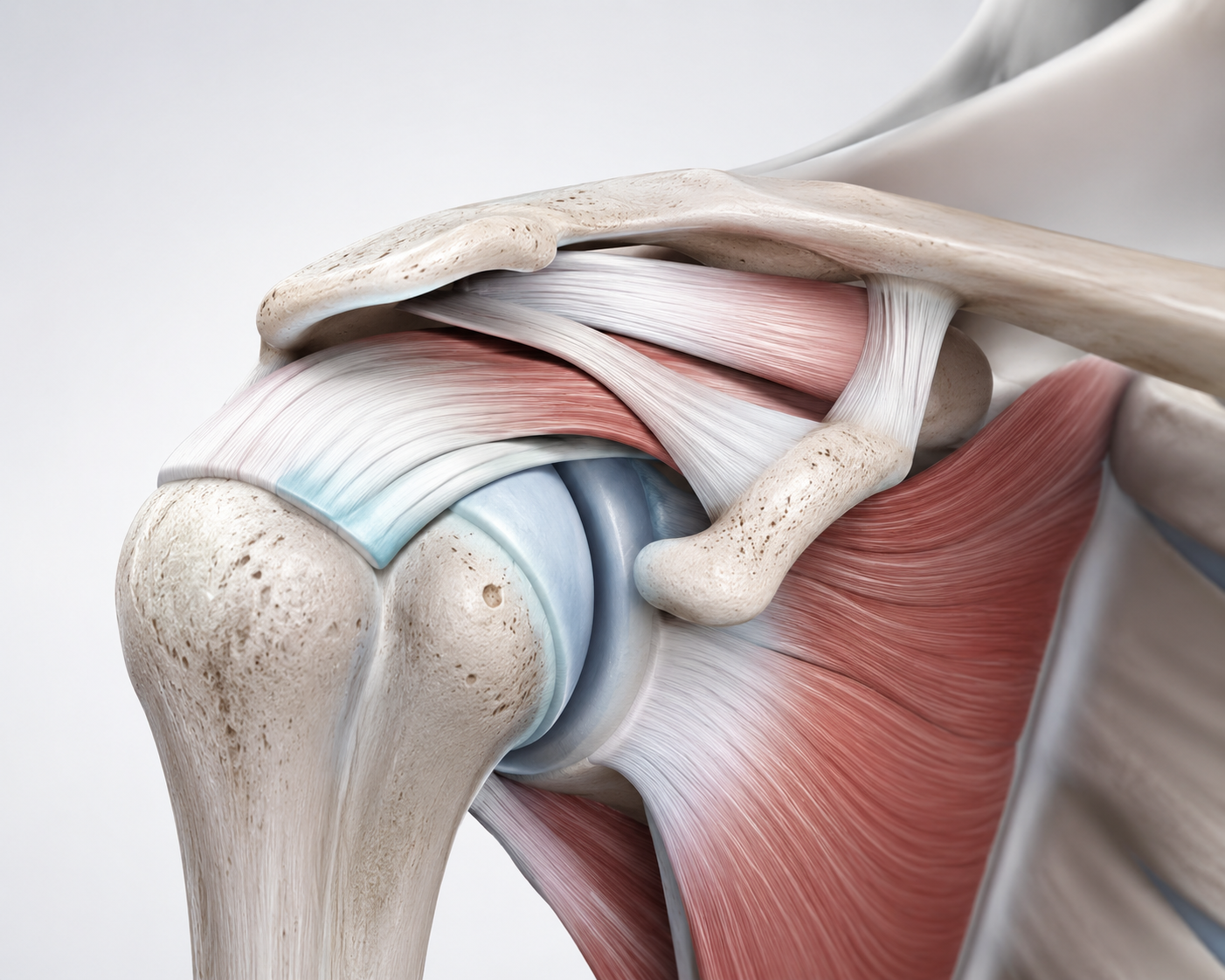
If you coach, parent, or are a baseball pitcher — at any level — shoulder injuries are not a matter of if. They are a matter of when, and more importantly, how preventable they are.
Baseball pitchers perform one of the most physically demanding repetitive motions in all of sport. During a single pitch, the shoulder reaches internal rotation angular velocities exceeding 7,250 degrees per second, and peak compressive force at ball release approaches 1,090 Newtons. Do this hundreds of times per outing, across an entire season, and the shoulder is under extraordinary cumulative stress.
At KRU Physical Therapy + Performance Lab — with locations in Deerfield Beach and Coral Gables — we work with overhead athletes at every competitive level. Most pitcher shoulder injuries are preventable, but that requires understanding why they happen and having the tools to monitor risk in real time.
01 | How Pitcher Shoulder Injuries Happen
Shoulder injuries in pitchers rarely happen from a single traumatic event. The overwhelming majority are overuse injuries — the cumulative result of too much load applied too quickly, without adequate recovery.
The Five-Phase Throwing Motion
Every pitch follows five phases: wind-up, early cocking, late cocking, acceleration, and deceleration/follow-through. The shoulder is under the greatest mechanical stress during late cocking and the deceleration phase, where eccentric forces slow the arm from 7,250°/sec to zero.
Training Load: The Primary Culprit
"The biggest predictor of injuries in pitchers is not necessarily biomechanical — it is likely overuse. Every component of the kinetic chain as well as biopsychosocial considerations and training loads must be addressed." — Current Concepts Review, Journal of Sports Physical Therapy, 2025
A prospective study in Scientific Reports tracking 92 high school pitchers found that training more than 5.5 hours per day of total baseball activity resulted in a 2.6x greater injury risk and injuries occurring 3.3x earlier in the season.
The Kinetic Chain: It Starts From the Ground Up
Research estimates 51–55% of pitching kinetic energy is generated by the legs and trunk. A 10% decrease in hip force contribution increases shoulder force demands by ~23%. When the kinetic chain breaks down, the shoulder compensates — and pays the price.
A 10% decrease in hip force increases shoulder force demands by ~23%.
Core, hip, and thoracic training is arm care — not optional supplemental work.
Lower extremity deficits elevate shoulder load on every single pitch.
Shoulder ROM Changes: Adaptive or Problematic?
Pitchers gain external rotation while losing internal rotation over years of throwing. This is partly adaptive (humeral retrotorsion), but it becomes pathological when the total arc decreases significantly versus the non-throwing side — a condition called GIRD — leading to impingement, labral injury, and rotator cuff damage.
02 | The ACWR Explained: Calculate Your Risk and Plan Recovery
The Acute:Chronic Workload Ratio (ACWR) is one of the most practical tools available for monitoring pitcher injury risk in real time. Originally developed by sports scientist Tim Gabbett and validated across dozens of sports, the ACWR answers the most important question in pitcher arm care: Is what I'm doing this week appropriate for what my body has been prepared for?
Your body adapts to stress over time — building chronic fitness. When the workload you impose in any given week dramatically exceeds what your tissues are conditioned for, you outrun your capacity to adapt. That gap is where injuries live.
Acute Load vs. Chronic Load
Acute load is your 7-day cumulative stress — your current fatigue. Chronic load is your 28-day conditioning baseline — your fitness. Dividing one by the other gives you the ACWR. A ratio near 1.0 means your body is doing roughly what it expects. A ratio significantly above 1.0 means you are overreaching your baseline.
What Counts as Load for a Pitcher?
Pure pitch count is incomplete — it treats a 100% effort fastball identically to a 50% warmup toss. A more accurate approach assigns a weighted load score to each session:
Effort % is estimated by the pitcher on a simple scale: 50% = easy catch, 70% = moderate bullpen, 85% = game effort, 100% = max velocity. This is equivalent to RPE (Rate of Perceived Exertion) used throughout strength and conditioning.
How to Calculate Your ACWR: Step by Step
STEP 1: Keep a 28-day throwing log — Record every session: date, pitch/throw count, and estimated effort %. Calculate a daily load score for each day. Rest days = 0. A simple spreadsheet or notebook is all you need.
STEP 2: Calculate your Acute Load — Sum all daily load scores for the most recent 7 days. This is your acute load — your current week's stress on the arm.
STEP 3: Calculate your Chronic Load — Sum all 28 daily load scores and divide by 4. This is the average weekly load your body has been conditioned to handle.
STEP 4: Apply the formula
STEP 5: Interpret and adjust — Check your result against the risk zones below, then plan the following week accordingly — not just whether to throw, but how much and at what intensity.
A Real-World Worked Example
High school pitcher, mid-season week:
| Day | Activity | Pitches | Effort | Daily Load |
|---|---|---|---|---|
| Mon | Bullpen | 55 | 80% | 440 |
| Tue | Rest | — | — | 0 |
| Wed | Long toss | 40 | 70% | 280 |
| Thu | Rest | — | — | 0 |
| Fri | Game start | 85 | 90% | 765 |
| Sat | Rest | — | — | 0 |
| Sun | Light flat ground | 30 | 60% | 180 |
| Acute Load (7-day sum) | 1,665 | |||
| Chronic Load (28-day total 4,800 ÷ 4) | 1,200 | |||
| ACWR = 1,665 ÷ 1,200 | 1.39 — Caution | |||
Interpretation: The game start pushed this week's ratio into the caution zone. Recommendation: reduce the following week's bullpen to ~40 pitches at 70% effort and skip mid-week long toss, targeting ACWR 0.90–1.10 to allow the chronic load to absorb the recent spike.
ACWR Risk Zones and Recovery Planning
| Zone | ACWR | Injury Risk | Recommended Action |
|---|---|---|---|
| Under-loaded | <0.85 | Low risk; deconditioning concern | Increase volume 5–10%/week gradually. Avoid sudden jumps to full intensity. |
| Optimal | 0.85–1.25 | Lowest injury risk zone | Maintain current pattern. Progress as planned. Schedule light sessions between high-intensity outings. |
| Caution | 1.26–1.49 | Elevated — approaching high-risk | Reduce next outing to 60–70% effort. Add 1 extra rest day. No new high-intensity sessions until ACWR < 1.25. |
| High Risk | ≥1.50 | Significantly elevated | 3–4 full rest days. Any throws at 50% effort only. Allow chronic load to absorb the spike. Recheck before returning to game intensity. |
| Critical Spike | ≥1.75 | Very high — overload likely | 5–7 days throwing rest. Light arm care only. Consult a sports PT before returning. Monitor for pain, stiffness, velocity changes. |
The 33% Rule: The Most Important ACWR Insight
A University of Kentucky cohort study of throwing athletes found that a change in ACWR of more than 33% in either direction — not just upward spikes — was associated with 8.3-times increased risk of throwing overuse injury the following week.
This has two critical implications coaches frequently miss:
- Ramping up too fast is dangerous. An ACWR jump from 1.0 to 1.5 in a single week — after a tournament or intensive camp — likely exceeds the 33% change threshold and substantially elevates risk.
- Shutting down too fast is also dangerous. Going from a heavy week to near-zero throwing — common at season end or after a tournament — can drop ACWR sharply, disrupting tissue adaptation. A planned ramp-down of 20–30% per week is safer than a sudden stop.
"Athletes with an ACWR that changed by more than 33% in either direction were 8.3 times more likely to suffer a throwing overuse injury in the subsequent week." — University of Kentucky cohort study, overhead throwing athletes
Important Limitations of ACWR
ACWR is a powerful monitoring tool, not a standalone predictor. Use it alongside subjective wellness data (sleep quality, soreness, perceived fatigue), physical assessments (shoulder ROM, strength), and clinical judgment. A sports physical therapist can help interpret your numbers in the context of the full clinical picture.
03 | The Most Common Shoulder Injuries in Pitchers
Throwing accounts for 59.5% of all shoulder injuries in baseball, with 73% occurring specifically in pitchers. Here are the diagnoses we see most frequently at KRU Physical Therapy + Performance Lab.
Rotator Cuff Strain / Tendinopathy
Overload of the supraspinatus, infraspinatus, or subscapularis from repetitive high-velocity throwing. Often presents as posterior shoulder pain worsening with follow-through. The end result of progressive overuse without adequate recovery.
SLAP Tear (Superior Labrum)
A tear of the superior labrum where the biceps long head attaches. The "peel-back" mechanism during late cocking is the classic cause. Associated with deep shoulder pain and velocity loss. Often co-occurs with GIRD.
GIRD — Glenohumeral Internal Rotation Deficit
Loss of 20° or more of internal rotation in the throwing shoulder versus the non-throwing side. Pitchers with GIRD are nearly twice as likely to be injured. A total arc deficit greater than 5° versus the contralateral shoulder is an actionable risk flag.
Shoulder Impingement Syndrome
Compression of rotator cuff tendons beneath the acromion. In pitchers, this is often secondary to posterior capsule tightness and scapular dyskinesis. Treating impingement alone without addressing root causes leads to recurrence.
Glenohumeral Instability
Years of extreme external rotation loads can stretch the anterior capsule, creating subtle instability. The shoulder may feel "loose" or "dead" — pitchers describe loss of control and velocity without obvious pain.
Scapular Dyskinesis
Altered scapular movement patterns from middle trapezius and serratus anterior weakness. Scapular depression is significantly elevated in pitchers with GIRD, suggesting a direct relationship between capsular tightness and scapular dysfunction.
"Despite advances in preventive care and medical management, shoulder and elbow injury rates in baseball appear to be rising. A comprehensive approach is required." — Risk Factors of Shoulder and Elbow Injuries in Baseball: A Scoping Review, PMC 2022
04 | Evidence-Based Prevention: Practical Guidance for Everyone
Prevention of pitcher shoulder injuries is a system. The most durable results come from coaches, parents, and athletes working from the same evidence-based playbook.
- Enforce pitch count limits and mandatory rest. USA Baseball guidelines require at least 3 rest days after 56+ pitches — non-negotiable.
- Track total daily baseball activity, not just pitch counts. The evidence-based ceiling is no more than 5.5 hours per day for developing pitchers.
- Calculate and monitor ACWR weekly. Target 0.85–1.25. Never let it spike above 1.5. Use the 33% change rule as your early warning system.
- Prioritize kinetic chain development. Lower-body strength, hip mobility, and core stability directly reduce mechanical demands on the shoulder.
- Schedule preseason shoulder screening. A total arc deficit >5° versus the non-throwing side warrants PT intervention before the season starts.
- Vary pitch intensity in practice. Progressive bullpen sessions starting at 50–70% effort reduce cumulative tissue stress without sacrificing development.
- Know the pitch count rules and advocate for your child. Knowing USA Baseball guidelines and enforcing them is critical protection.
- Ensure your pitcher takes 3–4 months off from overhead throwing per year. Year-round pitching is one of the strongest predictors of early arm breakdown.
- Trust pain as a signal, not a weakness. Persistent shoulder pain, mechanical changes, or sudden velocity loss warrants evaluation by a sports PT.
- Limit early single-sport specialization. Youth athletes who play multiple sports show better athleticism and lower arm injury rates.
- Ask about shoulder flexibility and strength at physicals. Preseason PT evaluation is the gold standard for identifying risk before symptoms appear.
- Warm up with purpose. Dynamic rotator cuff activation (band ER/IR, scapular punches) before progressive long toss at 50–70% effort first.
- Stretch your posterior shoulder every single day. Sleeper stretch and cross-body stretch: 3 × 30 sec each. Highest-yield daily habit for preventing GIRD.
- Track your own ACWR. Keep a throwing log. When your ACWR approaches 1.4, dial back proactively before it hits 1.5.
- Build your legs and core like an athlete. Deadlifts, hip hinges, rotational core, and thoracic mobility reduce shoulder burden on every pitch.
- Report velocity loss and mechanical changes immediately. These are often the first signs of tissue fatigue — early intervention prevents most serious injuries.
USA Baseball Pitch Count Limits by Age
| Age Group | Max Pitches/Game | Requires 3 Rest Days | Requires 4 Rest Days |
|---|---|---|---|
| 7–8 | 50 | 36+ | — |
| 9–10 | 75 | 46+ | — |
| 11–12 | 85 | 56+ | — |
| 13–14 | 95 | 56+ | 71+ |
| 15–16 | 95 | 56+ | 71+ |
| 17–18 | 105 | 56+ | 71+ |
Daily Arm Care Routine (5 Minutes)
Performed daily, this routine addresses the most modifiable risk factors for pitcher shoulder injury:
- Sleeper stretch: Side-lying, arm at 90° — gently press wrist toward floor. 3 × 30 sec.
- Cross-body stretch: Pull throwing arm across chest, stabilizing at elbow. 3 × 30 sec.
- Band external rotation: Elbow at 90°, arm at side — rotate outward against light band resistance. 3 × 15 reps.
- Scapular wall slide: Back against wall, arms at 90/90 — slide upward maintaining contact. 2 × 10 reps.
- Hip 90/90 stretch: Posterior hip mobility — one of the most overlooked kinetic chain components. 1 min per side.
Is Your Pitcher's Shoulder Ready for the Season?
At KRU Physical Therapy + Performance Lab, we offer evidence-based shoulder screening, ACWR-guided arm care, and sports rehabilitation for pitchers at every level — youth through professional. Two locations across South Florida, plus telehealth worldwide.
References
- Shitara H, Tajika T, et al. High baseball loads induce shoulder and elbow injuries among high school baseball pitchers: a prospective study. Scientific Reports. 2021;11(1):1–7.
- Wilk KE, Macrina LC, et al. Correlation of glenohumeral internal rotation deficit and total rotational motion to shoulder injuries in professional baseball pitchers. Am J Sports Med. 2011;39(2):329–335.
- Karasuyama M, et al. Preventive interventions for throwing injuries in baseball players: a scoping review. J Shoulder Elbow Surg. 2024;33(8):e451–e458.
- Risk Factors of Shoulder and Elbow Injuries in Baseball: A Scoping Review of 3 Types of Evidence. PMC. 2022.
- Pitch-Tracking Metrics as a Predictor of Future Shoulder and Elbow Injuries in MLB Pitchers. PMC. 2024.
- Evaluation and Treatment of Baseball Pitchers: There's More to Assess than the Arm. IJSPT. 2025.
- Glenohumeral Internal Rotation Deficit and Injuries: A Systematic Review and Meta-analysis. PMC. 2018.
- University of Kentucky cohort: ACWR change and throwing overuse injury risk. UKnowledge.
- Acute to Chronic Workload Ratio (ACWR) for Predicting Sports Injury Risk: A Systematic Review and Meta-analysis. PMC. 2025.