
Predictors of Hamstring Strain and Re-injury in Sprinting Athletes
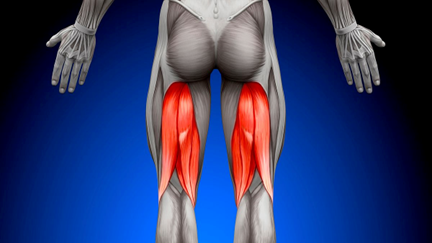
Hamstring injuries are common in sprinting because the tissue is exposed to very high force at long muscle lengths. The main risk factors are predictable, which makes them useful targets in rehab and return-to-sport planning
A previous hamstring strain is the strongest predictor of another hamstring strain.
That matters because many hamstring injuries are not fully resolved just because pain improves. The muscle may still have reduced strength, shorter fascicles, or poorer coordination when sprint speed increases.
Why hamstring injuries happen so often in sprinting
Sprint running places the hamstrings under a specific type of load. The highest risk moment is late swing, just before the foot hits the ground. In that phase, the hamstring is lengthening quickly while also producing force and slowing the lower leg.
That combination is the problem: high force, high speed, and long muscle length.
When that demand is repeated without enough capacity, the tissue fails.
The strongest predictors of hamstring strain
1) Previous hamstring injury
This is the clearest risk factor.
After a strain, the hamstring may not return to its original state right away. Scar tissue can reduce elasticity. Fascicle length may be shorter. Strength deficits can remain even when the athlete feels normal.
The practical point is simple: pain relief is not the same as full recovery.
2) Eccentric strength deficits
Hamstrings need to be strong while lengthening. That is called eccentric strength.
During sprinting, the hamstring must absorb force as the leg moves forward at high speed. If eccentric capacity is low, the load shifts to passive tissue and injury risk rises.
This is one reason rehab programs that only restore basic lifting strength often fall short.
3) Shorter fascicle length
Fascicles are the small muscle fibers inside the hamstring.
Shorter fascicles are associated with higher injury risk because they tolerate less stretch before failing. Longer fascicles appear better able to handle high-speed running.
Eccentric training is useful here because it can improve both strength and fascicle length.
4) Poor lumbopelvic control
The hamstring does not work alone. Pelvic position and trunk control change how much load it sees.
If the pelvis tips forward too much or the trunk is unstable, the hamstring can be placed in a more vulnerable position during sprinting. That increases strain on the tissue.
This is why hamstring rehab should include more than isolated hamstring work.
5) Strength imbalance between hamstrings and quadriceps
The quadriceps extend the knee. The hamstrings help slow that motion down.
If the quadriceps are much stronger than the hamstrings, the hamstrings may be forced to absorb more load than they can handle during sprinting. The issue is not just total strength. It is how well the posterior chain can control high-speed movement.
6) Not enough sprint exposure
Many hamstring injuries happen because the athlete has not sprinted enough, not because they sprint too much.
High-speed running is a skill and a tissue stressor. If an athlete has not been exposed to near-max or max velocity work, the hamstring is less prepared for competition demands.
Jogging and tempo running do not fully replace sprint exposure.
7) Fatigue
Fatigue changes mechanics and reduces force control.
As fatigue builds, coordination declines and stride mechanics become less efficient. That is one reason hamstring strains often happen late in sessions or late in games.
Load matters, but so does the quality of the movement under fatigue.
Why re-injury happens
Re-injury is usually a progression problem, not bad luck.
The most common issue is returning to running before high-speed capacity has been rebuilt. An athlete may be able to jog, run drills, and pass basic tests, but still not tolerate true sprinting.
Another common issue is skipping the middle stage of rehab. The athlete goes from pain relief straight to speed work without enough controlled loading at long muscle length.
Psychological readiness matters too. If an athlete is worried about re-injury, movement patterns often change. That can reduce force production and alter stride mechanics.
Poor load management after return is another major factor. Sudden spikes in sprint volume, intensity, or frequency can undo the progress that rehab created.
What reduces risk in practice
The main goal is to rebuild the exact capacities sprinting requires.
Restore eccentric hamstring strength.
Build strength at long muscle lengths.
Progress sprint exposure gradually.
Include pelvic, hip, and trunk control.
Avoid abrupt spikes in running load.
A useful rehab sequence often looks like this:
Phase 1: pain control and isometrics
Phase 2: eccentric strength and long-length control
Phase 3: dynamic strength and sprint progression
The key is not to skip from feeling better to full-speed running.
Closing takeaway
Hamstring strains are common, but they are not random. The biggest risk factors are previous injury, low eccentric strength, short fascicle length, poor sprint exposure, and incomplete load progression.
A hamstring is not ready because it is pain-free. It is ready when it can tolerate sprint-level force, length, and speed again.